Free Games
Three games — English earns the power-ups
Three match-3 games for Hebrew-speaking children aged 8–12 who learn English as a foreign language: Candy Kingdom, Sparkle Studio and Turbo Roads. 170 levels, 17 stations with a continuing story, bombs and chains — and power-ups earned one way only: three correct answers in a row in the English practice. Free, no ads, no purchases, no account and no network connection while playing. The games are in Hebrew.
How it works
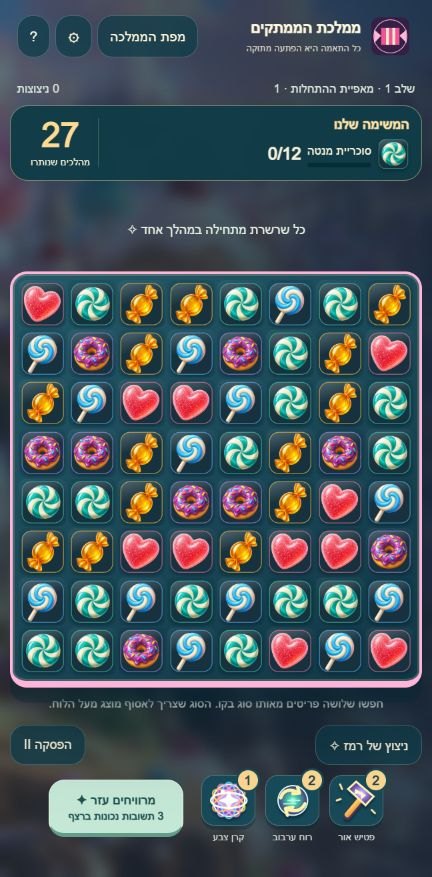
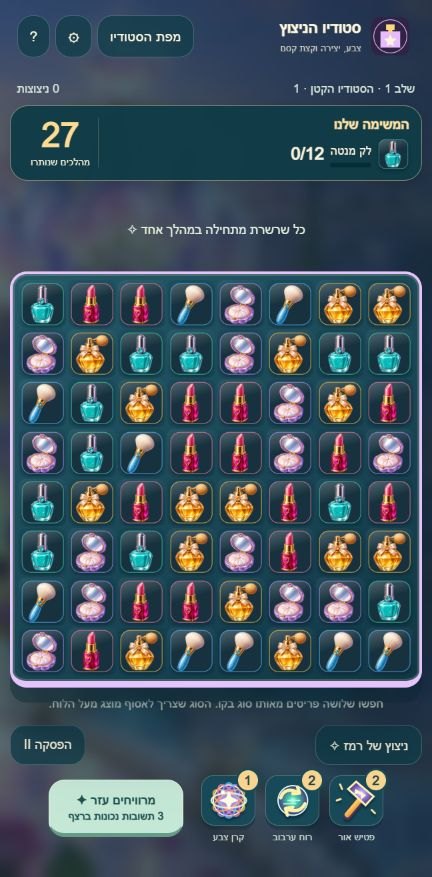
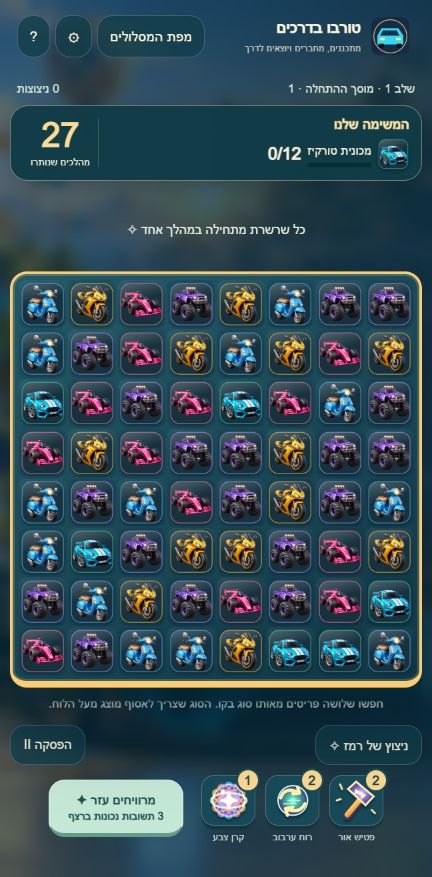
The game is a real game — not a quiz with a drawing. You line up three items of the same kind, unlock levels, build the world's collection and move the story forward. The power-ups (bomb, swap, colour beam) are neither bought nor handed out: you earn them with three correct answers in a row in the English practice, which progresses from single words to sentences and definitions, following the school vocabulary bands. Progress is saved on the device.
The three worlds
The same engine, the same 170 missions and the same English bank — but a separate plot, characters, backgrounds, tiles and music for each world. Every child picks their own world.
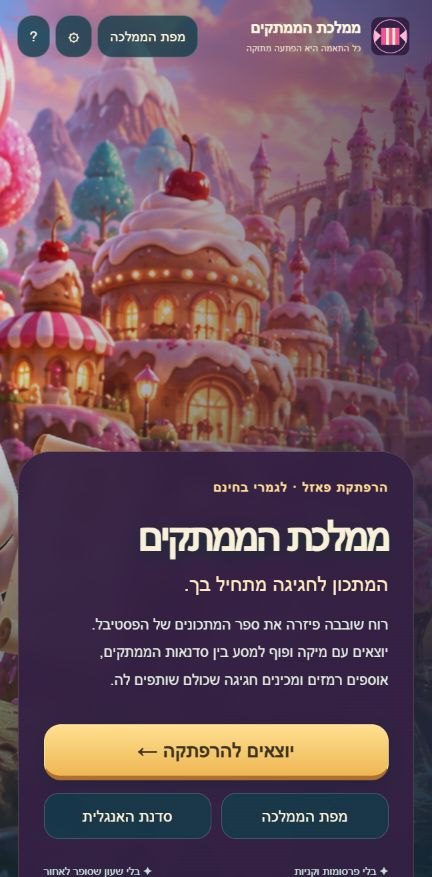
🍬 Candy Kingdom
A mischievous wind scattered the festival's recipe book. Set out with Mika and Poof on a journey through the candy workshops, gather clues and prepare a celebration everyone shares. A recipe collection, bombs and chains.
✨ Sparkle Studio
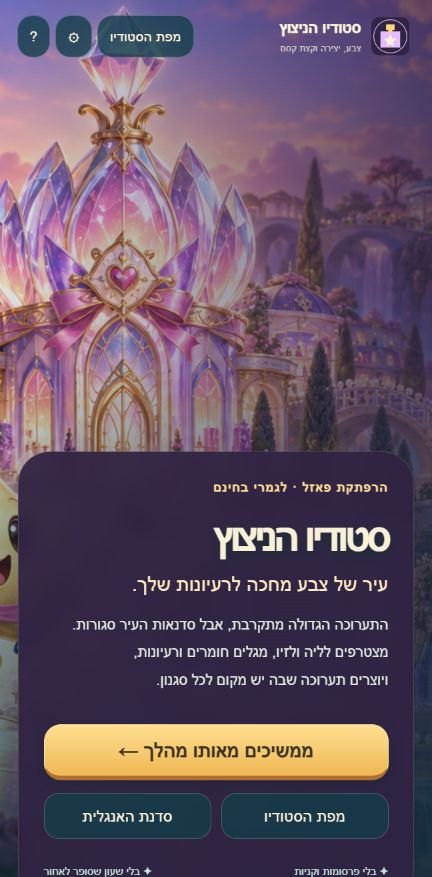
The big exhibition is coming, but the city's workshops are closed. Join Lia and Ziv, discover materials and ideas, and create an exhibition with room for every style. An artwork collection and varied missions.
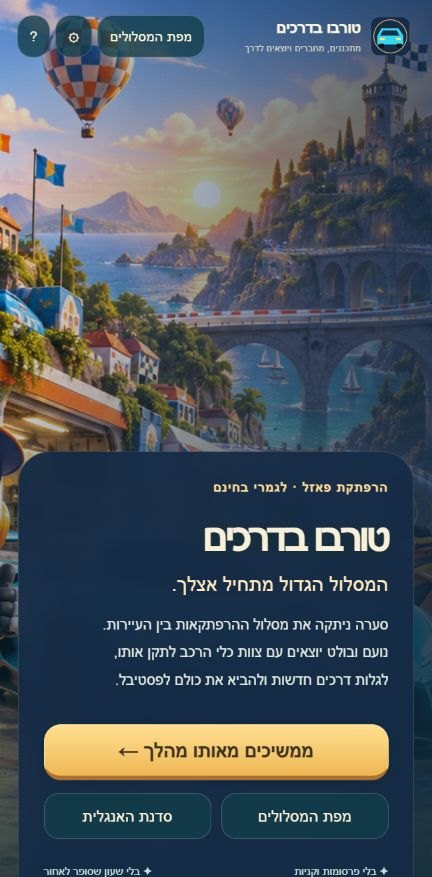
🏎️ Turbo Roads
A storm cut the adventure route between the towns. Noam and Bolt set out with the vehicle crew to repair it, discover new roads and bring everyone to the festival. A road-badge collection.
What the research says — and what we chose because of it
Before building we went through twenty successful games in the genre and through the learning literature. Two findings shaped the design — and one of them is actually a warning.
| Finding | Source | In the game |
|---|---|---|
| Retrieval practice — answering from memory instead of re-reading — consistently improved learning in 50 experiments from 37 studies in real classrooms. | Agarwal, Nunes & Blunt, Educational Psychology Review 33, 2021 — systematic review | The practice is always retrieval (answering), never reading; questions recur in different wordings and progress from words to sentences and definitions. |
| A meta-analysis of 128 experiments: extrinsic rewards undermine intrinsic motivation under some conditions — mainly an expected reward for merely doing the task. | Deci, Koestner & Ryan, Psychological Bulletin 125(6), 1999 — meta-analysis | The power-up is the result of success (three in a row), not of merely answering; no power-ups for money and no ads handing them out. |
| The opposing view: the claim that rewards broadly harm motivation is a "myth"; the effect depends on the kind of reward and the conditions. | Cameron, Banko & Pierce, The Behavior Analyst 24, 2001 — article | We assumed neither that every reward harms nor that every reward teaches — we built it so that the practice is part of the game, not a tax paid in order to play. |
Privacy and safety
No ads, no purchases, no account, no chat and no user-generated content. The games have no internet permission — progress and practice results are stored on the device only, and clearing the app's data deletes them. The privacy policy (Hebrew) is identical for all three games.
Frequently asked
Why three apps and not one?
Because a nine-year-old does not want to "choose a theme" — they want their world. The three worlds share an engine and learning content, but each is a complete game in its own right, with its own story and characters.
What age?
Hebrew-speaking children aged 8–12 who learn English as a foreign language. The practice starts from single words and progresses to sentences and definitions.
Can you play without internet?
Yes. The games do not request a network permission at all.
Know a child learning English?
All three games are free, with no ads and no purchases. Pick them a world — and send it.
Candy Kingdom on Google Play